Are Gym Showers Clean? What to Know and Check
Gym showers can be clean, but it comes down to how consistently the facility cleans its wet areas rather than how new or expensive it looks. A shower block, locker room and bathroom stay hygienic when high-touch surfaces, wet floors, drains, benches and lockers are cleaned on a regular schedule with the right products used correctly. Where that routine slips, warm and damp changing areas are exactly the conditions where grime, odours and surface bacteria build up fastest.
For members, the honest answer is that cleanliness varies a lot between gyms and even between times of day. For operators, it means presentation is only part of the job: the surfaces people actually touch and the floors they stand on barefoot are where hygiene is won or lost.
Whether Gym Showers Are Clean Depends on the Cleaning Routine
A gym shower is clean when the operator runs a consistent routine that covers the whole wet area, not just the visible surfaces. Warm, humid, high-traffic changing rooms create ideal conditions for soap scum, mould spotting, biofilm in drains and lingering odours, so cleanliness is a product of frequency and method rather than luck.
The surfaces that matter most in a gym wet area are:
- Shower floors, walls and controls
- Toilet and basin areas
- Lockers, benches and changing surfaces
- Wet floors and floor drains
- Mirrors, taps, door handles and other high-touch points
Regular, correct cleaning of these areas can help reduce the build-up of grime and the spread of soil between users, though no cleaning routine removes all germs and members still play a part through their own hygiene habits. The goal for an operator is a wet area that is consistently maintained across the day, not one that only looks good first thing in the morning.
How can you tell if a gym takes shower hygiene seriously?
Look at the details rather than the entrance. Clear floor drains without standing water, grout and silicone free of heavy black spotting, stocked and clean soap and paper areas, benches without grime, and an absence of strong musty or chemical-masking odours all point to a real routine. A visible cleaning schedule or sign-off sheet, and staff attending wet areas during busy periods, are further signs the operator maintains hygiene actively rather than reactively.
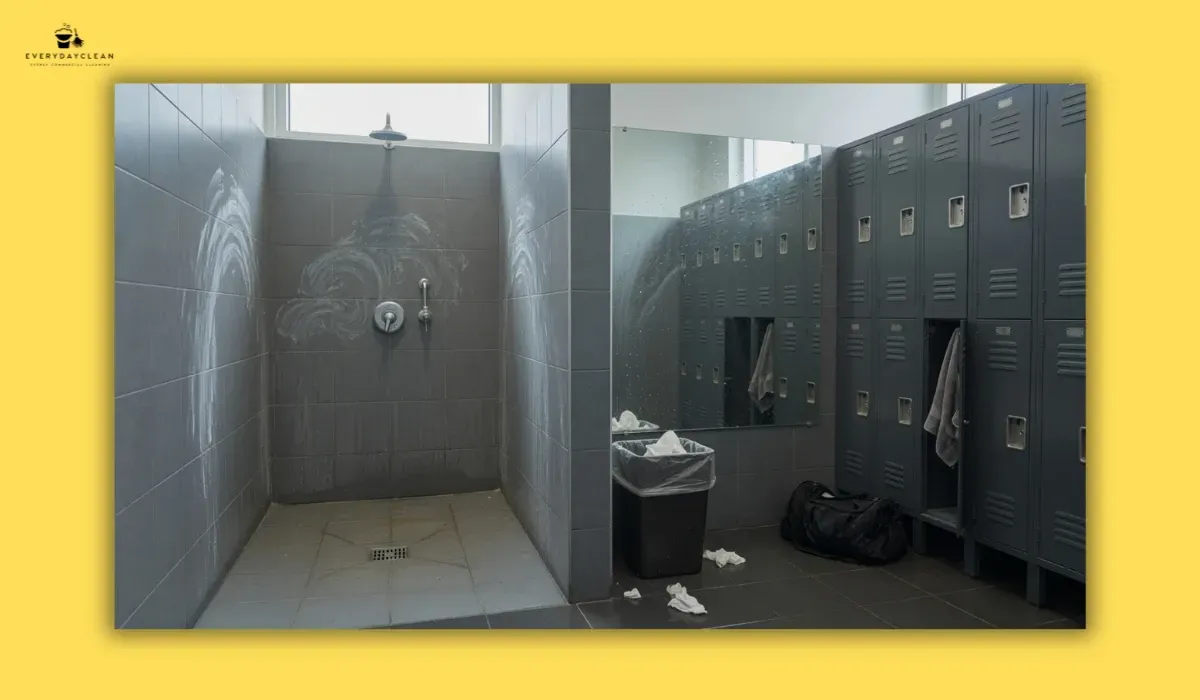
Signs a Gym Shower or Locker Room Is Not Being Cleaned Well
A few consistent warning signs suggest the wet area is not on a proper schedule.
- Standing water or slow-draining floors, which point to neglected or blocked drains
- Black or pink spotting on grout, silicone and shower corners, indicating mould or biofilm
- A persistent musty smell, or a heavy deodoriser used to mask it
- Soap scum and body-oil film on shower walls, controls and benches
- Sticky or gritty locker room floors, especially in corners and under benches
- Smeared mirrors, grimy taps and marked door handles
- Overflowing bins, empty soap dispensers or missing paper
- Hair, debris or residue left in shower recesses between uses
One or two issues during a peak period can happen in any busy gym. A pattern of them, or the same problems appearing early in the day, usually means the cleaning routine is not keeping up with the space.
Daily Cleaning Tasks Keep Gym Wet Areas Hygienic
Daily cleaning is the backbone of gym shower and locker room hygiene, and in high-traffic facilities some of these tasks need repeating across the day rather than once.
- Showers: Clean shower floors, walls and recesses, wipe down controls and rails, clear hair from drains, and address soap scum before it hardens. Check for early mould spotting in corners and grout.
- Toilets and basins: Clean and check toilets, urinals and basins, wipe taps and splash zones, restock soap and paper, and empty sanitary and general bins. These are among the highest-touch areas that need regular attention in a shared facility.
- Lockers and benches: Wipe down bench surfaces, locker tops and handles, and clear any left items or rubbish. Benches where people sit, dry off, and place bags deserve regular attention through the day.
- Floors: Clean and dry wet-area floors, paying attention to corners, edges and the transition between wet and dry zones. Wet floors are both a hygiene and a slip risk, so drying and hazard signage matter.
- High-touch points: Wipe door handles, locker handles, hooks, rails and light switches. These small surfaces are contacted constantly and are easy to miss in a quick clean.
- When using any cleaning or disinfecting product, follow the label instructions and the stated contact or dwell time, since products only work as intended when left on the surface for the time the manufacturer specifies. Rushing this step is one of the most common reasons a surface may look clean, but the product may not have had enough time to work as intended.
How often should gym showers be cleaned during the day?
It depends on traffic. A busy commercial gym often needs wet areas checked and touched up several times a day, particularly around morning, lunchtime and evening peaks, on top of a full daily clean. Quieter facilities may manage with a thorough daily clean and spot checks. The right frequency is whatever keeps floors, drains and high-touch points consistently maintained during the hours members actually use them.
Weekly and Periodic Deep Cleaning Tasks
Some tasks do not need daily attention but are essential to stop long-term build-up that daily cleaning cannot reach.
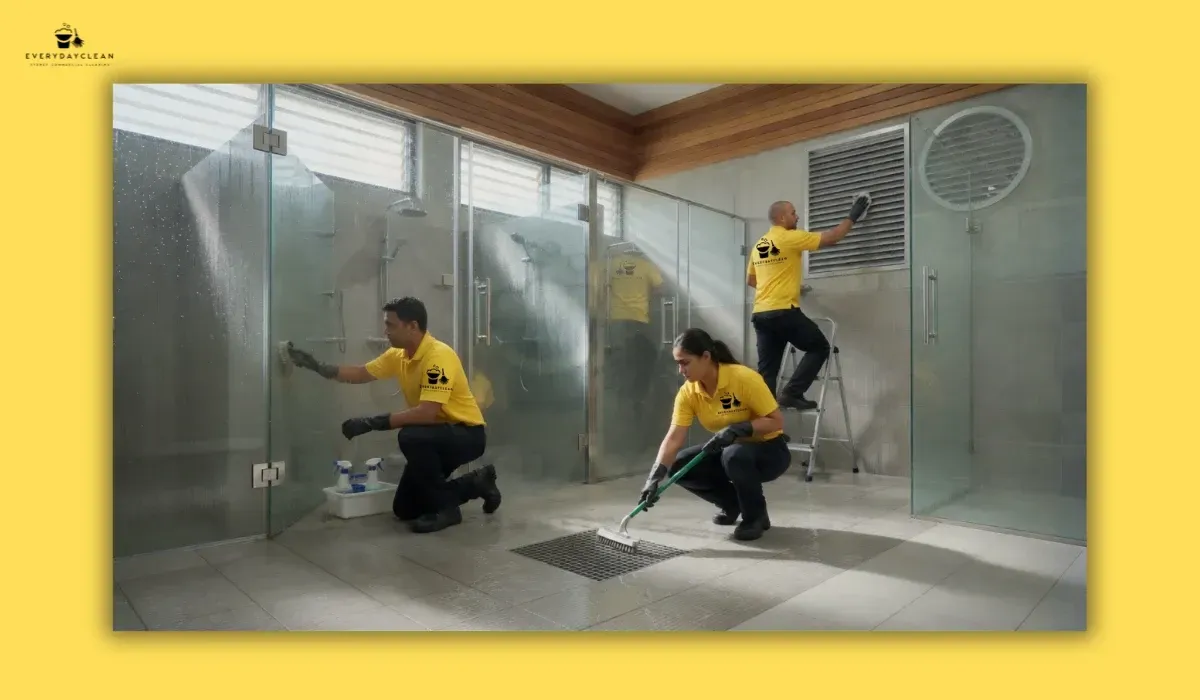
- Deep clean floor drains and grates to clear hair, soap and biofilm
- Scrub grout, silicone and shower corners where mould tends to establish
- Wash walls, partitions and shower screens thoroughly, not just spot-clean
- Detail-clean mirrors, tap fittings and stainless surfaces
- Clean locker interiors, bench frames and hard-to-reach edges
- Check and clean ventilation grilles and exhaust fans, since airflow affects how quickly wet areas dry
- Inspect for silicone gaps, damaged grout or leaks that trap moisture
Ventilation is easy to overlook but has a large effect on wet-area hygiene. Poor airflow keeps surfaces damp for longer, which is what allows mould and odours to take hold between cleans. Facilities that struggle with persistent smells often have a ventilation or drying problem rather than only a cleaning one.
Saunas and pools sit alongside these wet areas as related hygiene considerations, and they generally require their own specialist cleaning and water-management routines beyond standard shower and locker room care. They are a separate area of facility management rather than part of a shower cleaning schedule.
Short Gym Locker Room Cleaning Checklist
| Task | Frequency |
|---|---|
| Clean shower floors, walls and controls | Daily, plus peak touch-ups |
| Clean toilets, urinals and basins | Daily, plus peak touch-ups |
| Restock soap and paper, empty bins | Daily, plus peak checks |
| Wipe benches, locker handles and high-touch points | Daily |
| Clean and dry wet-area floors | Daily |
| Clear hair from shower and floor drains | Daily |
| Deep clean drains, grout and silicone | Weekly |
| Wash walls, partitions and screens | Weekly |
| Detail mirrors, taps and stainless | Weekly |
| Clean locker interiors and bench frames | Weekly |
| Check ventilation grilles and exhaust fans | Periodic |
Across a busy facility, keeping this routine going consistently is the hard part, which is why some operators bring in a scheduled service to cover the daily and periodic wet-area tasks. A regular gym cleaning routine is usually built around this same mix of daily upkeep and weekly deep cleaning.
Member Hygiene Habits Make a Real Difference
Even a well-cleaned gym relies on members doing their part, since wet areas are shared constantly throughout the day.
- Wear thongs or shower sandals in communal showers and changing areas rather than going barefoot
- Bring your own towel and avoid placing it directly on shared benches where possible
- Wipe down benches or equipment surfaces after use if wipes are provided
- Keep showers brief and clear hair from the drain before leaving
- Store wet gear in a bag rather than leaving it in shared lockers or on benches
- Report spills, blocked drains, odours or empty dispensers to staff so they can act quickly
These habits are simple, but they reduce how much soil and moisture accumulate between cleans, which helps the whole facility stay more hygienic. Members who want to understand the wider picture of gym hygiene may also find it useful to know what gyms use to clean equipment, since the same principles of correct products and contact times apply across the facility.

Frequently Asked Questions
Are gym showers actually clean?
They can be, but it varies widely between facilities and across the day. A gym shower is clean when the operator runs a consistent routine covering floors, drains, walls, benches and high-touch points, and repeats key tasks through busy periods. Visible signs like clear drains, clean grout and no musty odour are a reasonable guide to whether the routine is working.
What precautions should members take in gym showers?
A few simple habits help in any shared wet area, though this is general information rather than medical advice. Wearing thongs or shower sandals rather than going barefoot, using your own towel, keeping showers brief and clearing hair from the drain all reduce shared contact and moisture. For any specific health concern, a medical professional is the right source rather than a cleaning guide.
How should gym showers be cleaned properly?
With a consistent routine: daily cleaning of floors, walls, controls, drains and high-touch points, plus weekly deep cleaning of grout, drains, partitions and ventilation. Products should be used according to their label instructions and contact times, since that is what makes cleaning and disinfecting effective. High-traffic gyms usually need touch-ups through the day as well.
What are the signs a gym locker room is not clean?
Standing water, slow drains, black or pink grout spotting, a persistent musty smell, sticky floors, soap scum on benches and walls, smeared mirrors, and empty soap or paper supplies. A pattern of these, or their presence early in the day, suggests the cleaning schedule is not keeping up with how the space is used.
How often should gym locker rooms be deep cleaned?
Daily cleaning handles routine hygiene, while deeper tasks like drain cleaning, grout scrubbing, wall washing and ventilation checks are usually done weekly, with some inspections on a periodic cycle. The right frequency depends on how busy the facility is, since higher traffic accelerates build-up in drains, grout and wet corners.
Keeping Wet Areas Consistently Maintained Is What Matters
Whether a gym shower is clean comes down to routine, not appearance. Consistent daily cleaning of floors, drains, benches and high-touch surfaces, backed by weekly deep cleaning of grout, partitions and ventilation, is what keeps a wet area hygienic through constant use. Members can read the signs by checking drains, grout and odours, and can support the effort with simple habits like shower footwear and reporting problems early. For operators, a structured schedule that repeats key tasks across peak periods is the difference between a wet area that looks clean at opening and one that stays clean all day.
Blog