Airbnb Cleaning Supplies and Restocking Checklist
Airbnb cleaning supplies should cover six things: cleaning products, guest consumables, linen and laundry basics, bathroom items, kitchen restocking, and backup inventory so you never run short between guests. Getting this right is less about having every product and more about having the right items stocked in the right amounts, ready for each turnover.
This guide is about supplies and restocking, not the cleaning method itself. It lists what to keep by area, sets out a per-turnover restocking checklist, covers weekly and monthly inventory checks, and clarifies what a cleaner can restock versus what a host should approve. It pairs with, rather than repeats, an Airbnb cleaning checklist.
Airbnb Cleaning Supplies List By Area
Organising supplies by area makes restocking faster and easier to hand over to a cleaner. The lists below are a general starting point to adapt to the property.
Bathroom
- Toilet cleaner, bathroom surface spray and glass cleaner
- Toilet paper, with spares left visible for guests
- Hand soap and body wash or soap
- Shampoo and conditioner if provided
- Fresh towels and bath mats
- Spare toilet brush and bin liners
Kitchen
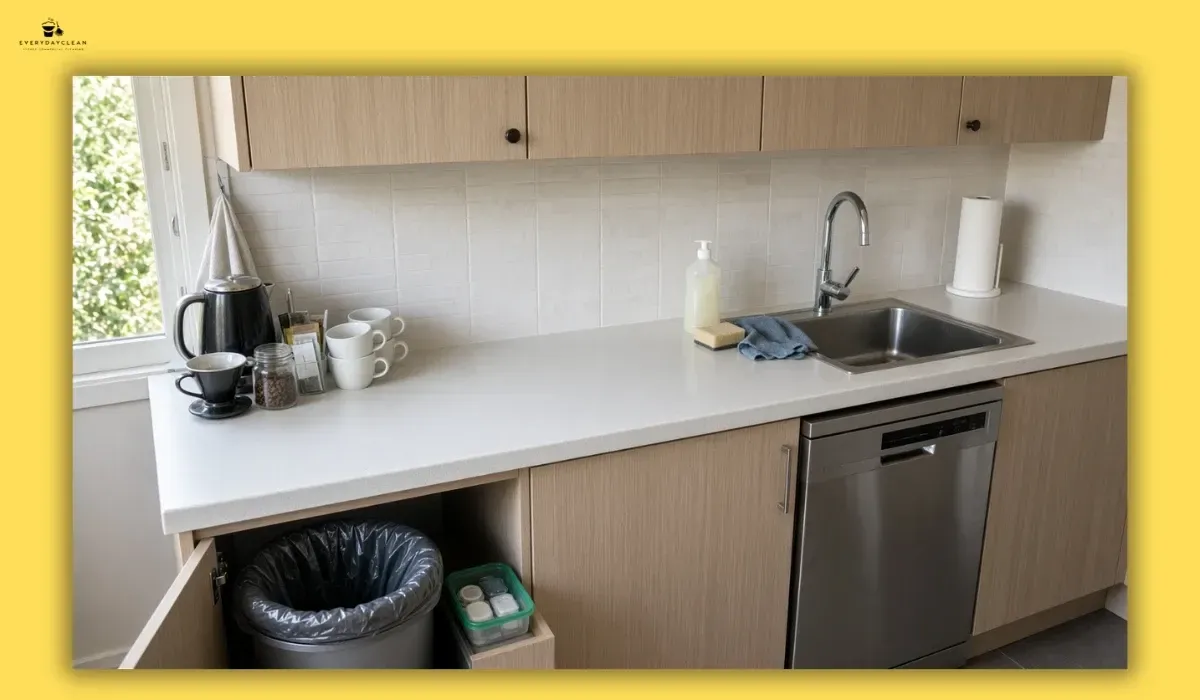
- Dishwashing liquid and dishwasher tablets if applicable
- Surface spray and disinfectant suitable for kitchen use
- Sponges, dish cloths and paper towel
- Tea, coffee, sugar and basic consumables if offered
- Bin liners and cling wrap or foil if provided
- Salt, pepper and any pantry basics the listing promises
Bedrooms
- Fresh linen sets, ideally with spare sets per bed
- Spare pillowcases and mattress protectors
- Extra blankets for cooler months
- Any welcome items the listing includes
Laundry
- Laundry detergent and fabric softener if used
- Stain remover for linen and towels
- Spare linen and towel sets so turnovers are not held up by washing
- Iron, ironing board and clothes airer if provided
General Cleaning Kit
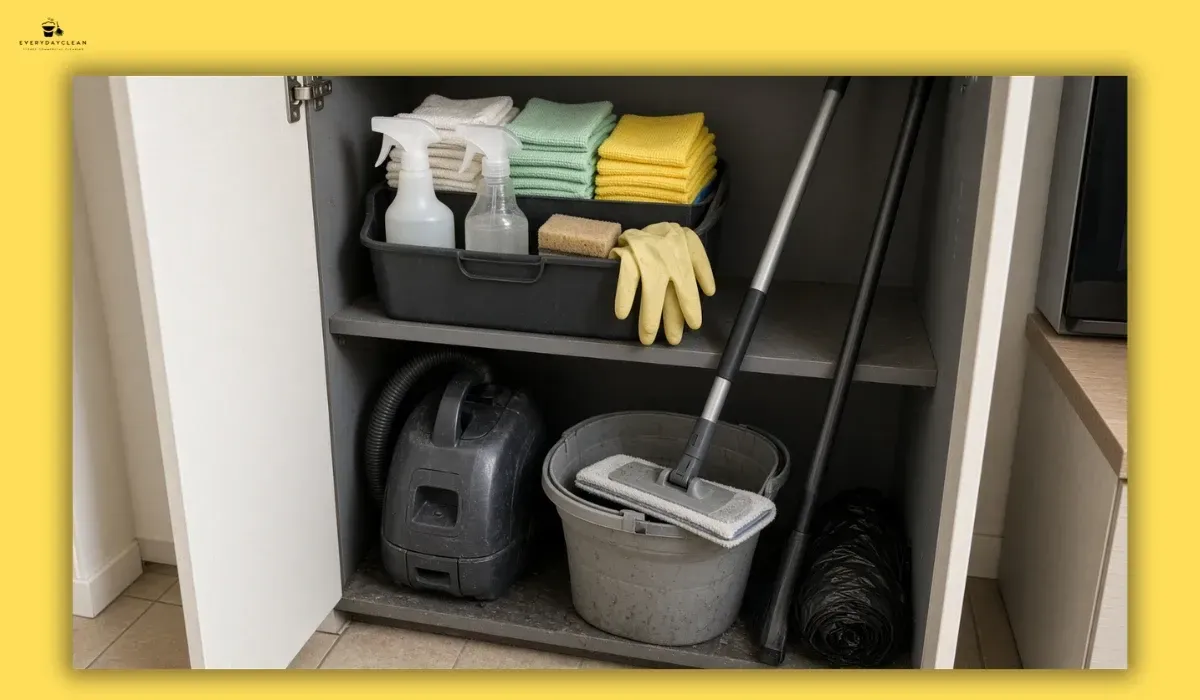
- All-purpose cleaner, disinfectant and glass cleaner
- Microfibre cloths, ideally colour-coded by area
- Vacuum, mop and bucket
- Gloves and a suitable mask for cleaning tasks
- Rubbish bags and a caddy to carry supplies between rooms
Colour-coding cloths by area, such as one colour for bathrooms and another for kitchens, helps reduce cross-contamination during turnovers.
Restocking Checklist For Every Turnover
Each turnover should reset the property to a consistent standard, so a short restocking checklist run every time keeps nothing missed.
- Replace used toilet paper and leave spares visible
- Top up hand soap, body wash, shampoo and conditioner
- Restock kitchen consumables offered, such as tea, coffee and dishwasher tablets
- Replace dish cloths, sponges and paper towel as needed
- Set out fresh linen and towels, and remove used sets for laundry
- Empty all bins and replace liners
- Check cleaning products used on site are not running low
- Note anything low or missing for the host to reorder
Running the same list every turnover is what keeps a property consistent across different guests and, if used, different cleaners.
Weekly And Monthly Inventory Checks
Turnover restocking handles the day-to-day, but a periodic inventory check catches slower-moving items before they run out. A weekly check suits busy listings, while a monthly check may be enough for quieter ones.
These checks are the point to count linen and towel sets, review backup stock of consumables, note products approaching empty, and flag anything worn or damaged such as stained linen or a failing appliance. Catching a dwindling linen supply at a weekly check is far easier than discovering it mid-turnover with a guest arriving.

Backup Stock Hosts Should Keep
Running out between guests is one of the most avoidable turnover problems, so a buffer of backup stock matters. Hosts generally benefit from keeping spare sets of linen and towels beyond what is in use, a reserve of high-use consumables like toilet paper and hand soap, and a backup of the core cleaning products.
Having at least one spare linen set per bed is a common approach, since it lets a turnover proceed while used linen is being washed. The right buffer depends on how often the property books, so busier listings justify more backup stock than occasional ones.
What Cleaners Can Restock Versus What Hosts Approve
Clear boundaries help a cleaner keep a property stocked without overstepping. Cleaners are generally well placed to restock from supplied stock, use the cleaning products provided, flag low or missing items, and follow the turnover checklist.
Purchasing new supplies, changing product brands, replacing linen or towels, and any spending decisions are usually best left for the host to approve, unless a standing arrangement is agreed in advance. Setting out who does what avoids both under-stocking and unexpected costs. For hosts who would rather have turnovers and restocking handled consistently, professional Airbnb cleaning can cover the cleaning and supply checks against an agreed list.
How This Differs From An Airbnb Cleaning Checklist
A supplies and restocking checklist is not the same as an Airbnb cleaning checklist. A cleaning checklist covers the tasks of cleaning the property, such as what to wipe, vacuum and sanitise in each room. A supplies and restocking checklist covers what to replenish and keep in stock so the property is guest-ready.
The two work together during a turnover, but they answer different questions: one is how to clean, the other is what to restock. Keeping them separate makes each easier to follow and hand over, and avoids gaps where restocking is assumed but not actually listed.
Keeping An Airbnb Stocked And Turnover-Ready
A well-supplied Airbnb comes down to a clear list by area, a restocking routine run every turnover, periodic inventory checks, and a sensible buffer of backup stock. Matching the amounts to how often the property books keeps it consistently ready without over-buying.
Pairing a restocking checklist with a separate cleaning checklist, and agreeing who restocks what, is what keeps a property guest-ready turnover after turnover. The aim is simple: no guest arrives to a missing essential, and no turnover is held up by something that ran out.

Frequently Asked Questions About Airbnb Cleaning Supplies
What Cleaning Supplies Do You Need For An Airbnb?
A core kit covers cleaning products such as all-purpose cleaner, disinfectant and glass cleaner, plus microfibre cloths, a vacuum, mop and gloves. Alongside these, guest consumables, linen, and bathroom and kitchen items need stocking. Keeping backup stock of high-use items avoids running short between guests.
How Often Should Airbnb Supplies Be Restocked?
Consumables and linen are reset every turnover, while a weekly or monthly inventory check catches slower-moving items and backup stock before they run out. Busier listings suit weekly checks, and quieter ones may only need monthly.
What Backup Stock Should An Airbnb Host Keep?
Spare linen and towel sets beyond what is in use, a reserve of high-use consumables like toilet paper and soap, and a backup of core cleaning products. At least one spare linen set per bed lets a turnover continue while used linen is being washed.
Is A Supplies List The Same As An Airbnb Cleaning Checklist?
No. A cleaning checklist covers the tasks of cleaning each room, while a supplies and restocking list covers what to replenish and keep in stock. They work together during a turnover but answer different questions, so keeping them separate makes each easier to follow.
Blog