Builders Clean Checklist: What It Covers in Sydney
Builders Clean Checklist for Post-Construction Sites
A builders clean checklist covers the removal of construction dust and debris, cleaning of floors, walls, skirting, windows, tracks, fixtures, kitchens, bathrooms, doors and cupboards, and a final inspection before handover. Most builders cleans run across three stages, with each stage handling a different level of detail as the site moves from rough construction to a finished, occupiable space.
Getting the sequence right matters. Cleaning too early means fine dust settles again once trades finish, and cleaning surfaces before floors usually doubles the work. The checklist below sets out what each stage usually covers so nothing gets missed before keys change hands.
A Builders Clean Runs Across Three Stages
Most post-construction cleaning is split into an initial clean, a detailed clean and a final or handover clean. Splitting the work this way keeps effort matched to site conditions and reduces rework caused by ongoing trades.
What does the initial builders clean cover?
The initial clean, sometimes called the rough clean, happens once major construction and trade work is largely finished. The focus is bulk removal rather than fine detail.
- Remove large debris, offcuts, packaging and rubbish
- Sweep and vacuum loose dust from floors and hard surfaces
- Clear stickers, labels and protective films from windows and fixtures
- Remove excess paint splatter, adhesive and render spots where safe to do so
- Clear access paths and communal areas so later stages can proceed
What does the detailed builders clean cover?
The detailed clean, also called the second or fine clean, targets the fine construction dust that settles into every surface. This stage usually takes the most time.
- Wipe down walls, skirting boards, architraves and ledges
- Clean doors, door frames, handles and hinges
- Detail window glass, frames, sills and tracks
- Clean inside and outside cupboards, drawers and wardrobes
- Degrease and detail kitchen benches, splashbacks, sinks and cabinetry
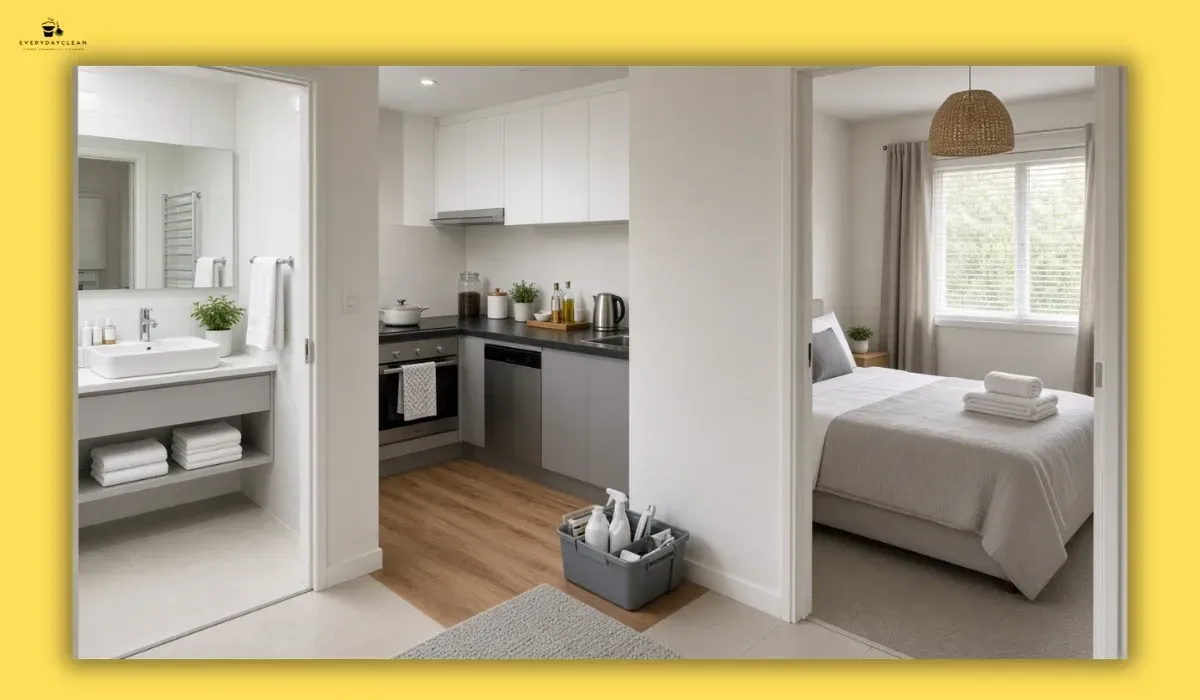
- Clean bathrooms including tiles, grout lines, basins, toilets, showers and mirrors
- Wipe light fixtures, switches, power points, vents and air conditioning units
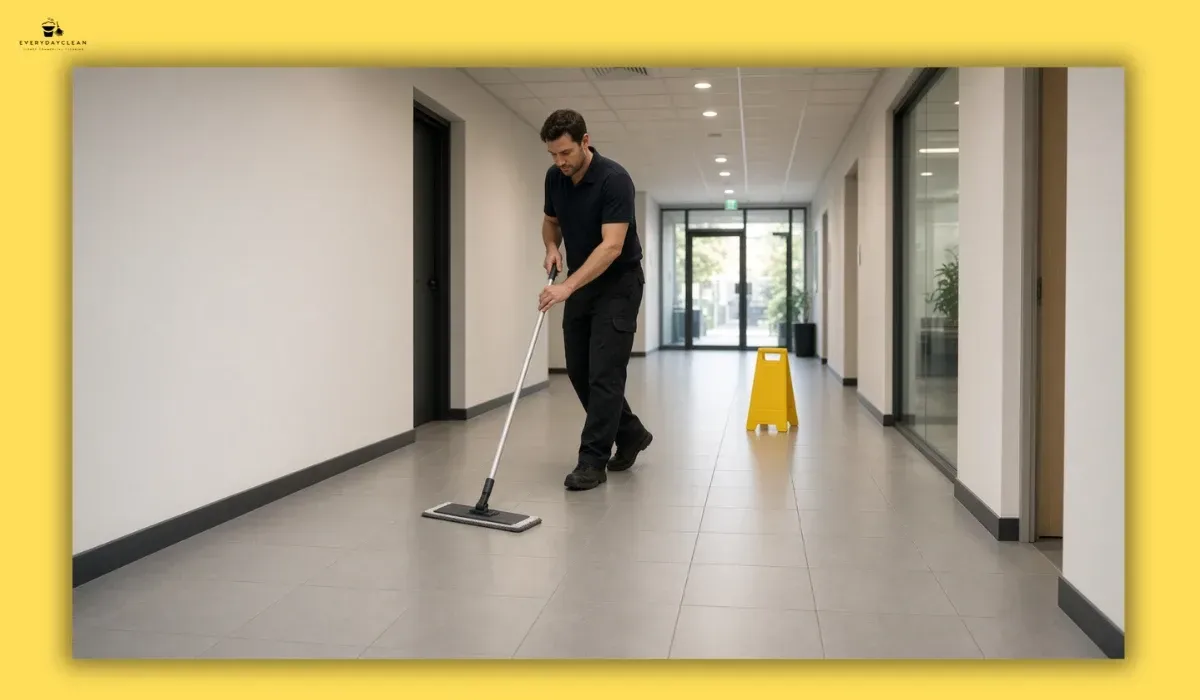
- Mop and detail hard floors, and vacuum any carpeted areas
What does the final handover clean cover?
The final clean happens just before handover or inspection. It is a check-and-polish pass that assumes the detailed clean is already done.
- Spot-clean any marks, smudges or dust that reappeared
- Polish glass, mirrors and stainless steel
- Confirm floors are streak-free and fully finished
- Check fixtures, fittings and tracks one final time
- Clean outdoor entry areas, thresholds and immediate approaches
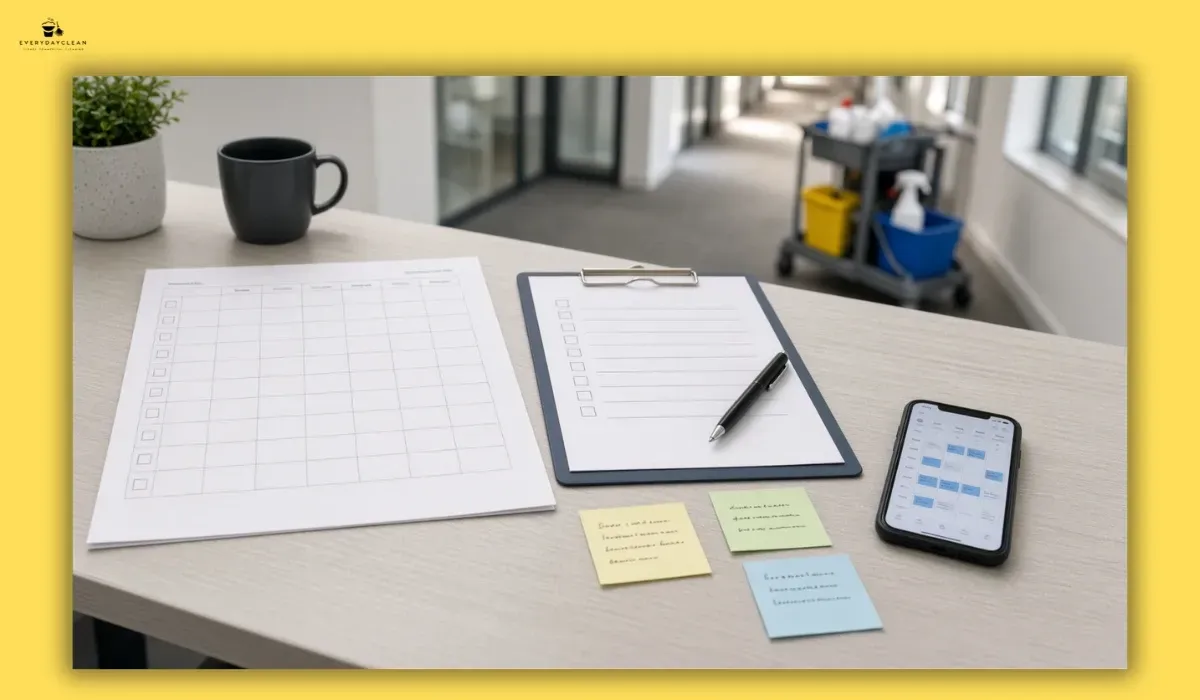
- Run a final walkthrough inspection against the checklist

Key Areas a Builders Clean Should Not Miss
Construction dust is fine, abrasive and travels into places general cleaning skips. The areas below are the ones most commonly missed on a rushed site.
| Area | What usually needs attention |
|---|---|
| Dust and debris | Fine dust on all horizontal and vertical surfaces, plus leftover offcuts |
| Floors | Tiles, timber, vinyl and carpet, including grout and edges |
| Walls and skirting | Splatter, scuff marks, dust build-up on ledges |
| Windows and tracks | Glass, frames, sills, stickers and gritty track debris |
| Kitchens | Benches, splashbacks, sinks, inside cupboards and appliances |
| Bathrooms | Tiles, grout, basins, toilets, showers, mirrors |
| Fixtures | Lights, switches, power points, vents, air conditioning |
| Doors and cupboards | Frames, handles, hinges, interior surfaces |
| Outdoor entry | Thresholds, porches and immediate approach areas |
| Final inspection | A walkthrough confirming every area meets handover standard |
A thorough builders' clean is where general post-construction cleaning support is often worth arranging, since fine dust can take several passes to fully clear.
Deciding Between a DIY Builders Clean and a Professional
For a single small room or a minor renovation, a careful DIY clean may be enough if you have the time and equipment. Fine construction dust usually needs repeated passes, industrial vacuums with suitable filtration, and the right products for different surfaces, so larger or multi-room sites often take longer than expected.
A professional clean tends to make sense when the site is large, the handover deadline is tight, multiple trades have left different residues, or the surfaces are delicate and easy to scratch. Weighing the size of the job against the time and gear on hand is usually the clearest way to decide.
When Specialist Handling Is Required
Some post-construction residues are not a standard cleaning task. Hazardous materials, suspected asbestos, silica-risk dust from cutting or grinding, and regulated construction waste need specialist assessment and handling under the relevant Australian work health and safety and disposal requirements.
A general builders clean does not cover these. If any of this material may be present, stop and confirm with a licensed specialist before disturbing it, rather than attempting to clean or remove it as part of a routine clean.

Frequently Asked Questions
How long does a builders clean usually take?
It depends on the size, condition and number of stages involved. A small single-room clean may take a few hours, while a full multi-stage clean of a larger property can run across one or more days. Ongoing trade access and the amount of fine dust present both affect the time needed.
Is a builders clean the same as a regular clean?
No. A builders clean targets fine construction dust, debris, paint splatter, adhesive and residue that general cleaning does not address. It usually needs different equipment and several passes, and it works through stages rather than a single routine cleaning visit.
When should each builders clean stage happen?
The initial clean happens once major trade work is largely finished, the detailed clean once the space is close to complete, and the final clean just before handover or inspection. Cleaning too early usually means fine dust resettles once remaining trades finish their work.
Does a builders clean include outdoor areas?
It often includes immediate outdoor entry areas such as thresholds, porches and approach paths, since these collect dust and debris during construction. Larger external works, driveways or extensive grounds are usually quoted separately depending on the scope and condition of the site.
Getting the Site Ready for Handover
A builders clean is the step that turns a finished construction site into a space that is ready to occupy, so working through each stage in order and finishing with a proper inspection is what protects the result. If the job is large, time is short, or specialist residues may be present, arranging professional cleaning support, or a licensed specialist where regulated material is involved, is usually the safer path. Comparing the checklist above against the actual condition of the site is usually the clearest way to decide whether post-construction cleaning support is needed.
Blog