How to Clean an Office Chair: By Material and Task
How to Clean an Office Chair: Fabric, Mesh, Leather and Wheels
The method for cleaning an office chair starts the same way regardless of material: vacuum or brush off loose debris first, check the care label or manufacturer guidance, patch test any product on a hidden area, then clean by material type. Skipping the dry stage before anything gets wet is where most chair cleaning problems start, since wetting dust and hair into fabric creates marks that were not there before.
Check the care label before choosing a product
Most upholstered office chairs carry a care tag on the underside of the seat or beneath a cushion. The code on the tag narrows the product choice before anything else.
- W - water-based cleaners only
- S - solvent-based cleaners only, no water
- WS - either water or solvent-based cleaners
- X - vacuum only, no cleaning products of any kind
Mesh, leather and faux leather chairs often do not carry a fabric code but usually have manufacturer cleaning guidance in the product documentation. When that is not available, test cautiously.
The general method, applied to every material
- Step 1: Remove loose debris. Use a vacuum with an upholstery attachment or a soft brush. Cover the seat, back, armrests, and any fabric-covered sides. This step prevents loose debris from being pushed into the fabric during cleaning.
- Step 2: Patch test. Apply a small amount of the intended cleaner to a hidden area, such as the underside of the seat or the back of the backrest. Leave it to dry fully and check for colour change, shrinkage or surface damage before treating any visible area.
- Step 3: Spot clean marks first. Address individual stains or marks before general cleaning. Blot rather than rub. Working from the outside of the mark toward the centre reduces spreading.
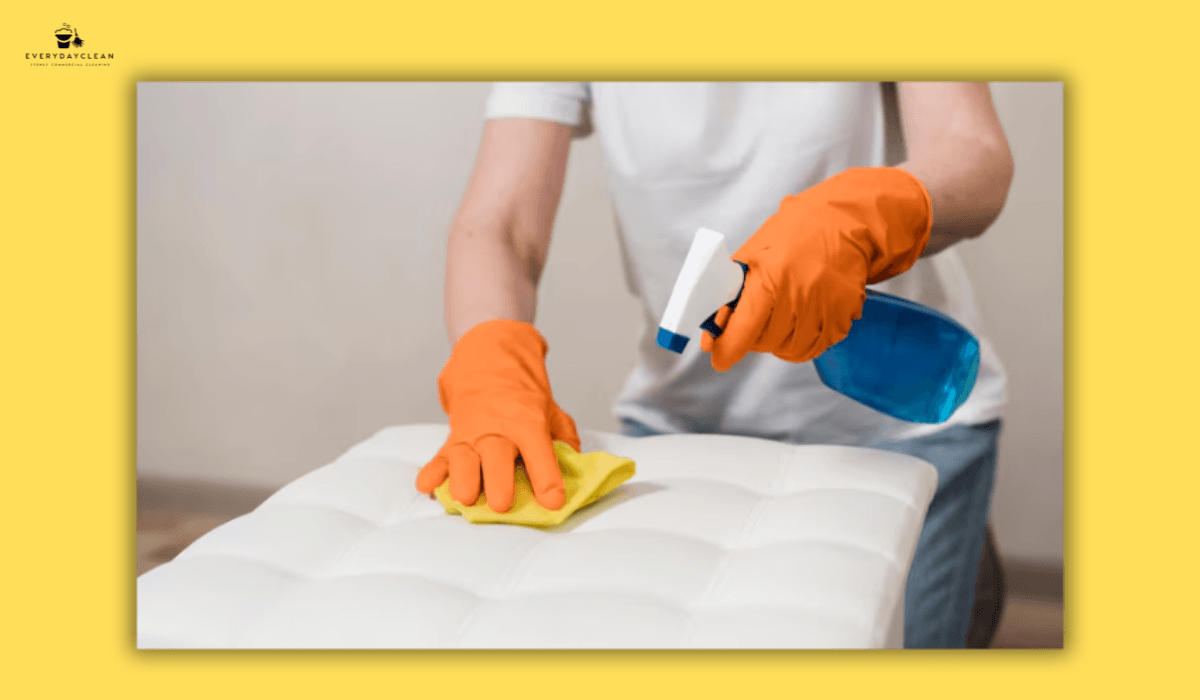
- Step 4: Clean the full surface. Apply the appropriate cleaner for the material, working in sections. Use as little moisture as necessary. Over-wetting fabric or mesh can cause the material to sag, create water marks or promote mildew in the padding underneath.
- Step 5: Dry fully before use. Allow the chair to air dry completely before anyone sits in it. Sitting on damp upholstery re-soils the surface and can cause additional marking.
Cleaning by material
Fabric office chairs
Fabric chairs coded W or WS respond to water-based upholstery spray or a mild detergent solution. Spray the cloth rather than the fabric directly, then wipe in the direction of the weave rather than scrubbing. For heavier soiling, a small amount of dish soap in water applied with a cloth and blotted dry handles most surface grime.
Fabric coded S requires a solvent-based product. Ventilate the room during and after application, since solvent products can accumulate fumes. Do not use water on S-coded fabric, as it can leave permanent water rings on certain materials.
Common fabric chair issues:
- Body oil build-up on armrests and headrests. This is accumulated soil rather than a single stain. A water-based upholstery cleaner with some dwell time on W and WS fabrics can reduce it, though long-standing build-up may require more than one treatment.
- Food and drink spills. Blot immediately, then treat with an appropriate cleaner. Old dried spills are harder to treat and results vary.
- General dullness. Often a combination of dust, body oil and product residue from previous cleaning. A thorough vacuum followed by a proper damp clean usually improves it.
Mesh office chairs
Mesh is the material most sensitive to over-wetting, because moisture that penetrates the mesh reaches the frame and structural components behind it. It is also the material most prone to collecting hair and lint in the weave.
For regular maintenance, a vacuum with a brush attachment removes most surface dust and hair from mesh without any moisture. For marks on the mesh panels, a lightly dampened cloth with a small amount of mild soap works for most surface soil. Wring the cloth thoroughly so the mesh stays damp rather than wet, and allow full air drying before the chair is used.
Avoid soaking mesh or directing a stream of water at it, since the structure behind the mesh may not dry fully and some frames develop rust or odour when repeatedly wet.
Leather and faux leather office chairs
Genuine leather and faux leather need different products. Using a standard upholstery cleaner on leather can strip the surface coating or dry the material. A cleaner designed for leather, used with a soft cloth, is the appropriate choice.
For faux leather (often polyurethane or vinyl surface), a mild solution of water and dish soap on a soft cloth handles surface dust and light marks. Avoid alcohol-based products, harsh degreasers and anything with bleach or abrasives, which can cause cracking and surface deterioration over time.
Both materials benefit from avoiding over-wetting. Wipe dry after cleaning and allow the chair to air before use. Conditioning leather after cleaning is sometimes recommended, though this depends on the specific leather type and the manufacturer's guidance.
Common leather and faux leather issues:
- Cracking or peeling on faux leather. This is usually material degradation from age or previous harsh product use, not a cleaning issue. Cleaning products cannot reverse it.
- Surface marks and body oil. A damp cloth with mild soap removes most surface soil from faux leather. On genuine leather, a leather cleaner is preferable.
Office chair cushions
Removable seat cushions can often be unzipped and the cover washed separately. Check the cushion cover's care label before doing so, since some covers must be dry cleaned or cannot be machine washed. Allow the cover to dry fully before refitting, since putting a damp cover back on the cushion insert can cause mildew.
Non-removable cushioning is cleaned in the same way as the surrounding upholstery. The main risk is over-wetting the padding beneath the surface, which can take a long time to dry and may develop an odour if moisture is trapped. Use as little moisture as possible and allow adequate drying time. The same careful approach is also important in
office cleaning in Sydney, where upholstered office chairs and soft furnishings require controlled moisture to prevent damage and ensure faster drying.
Chair wheels and casters
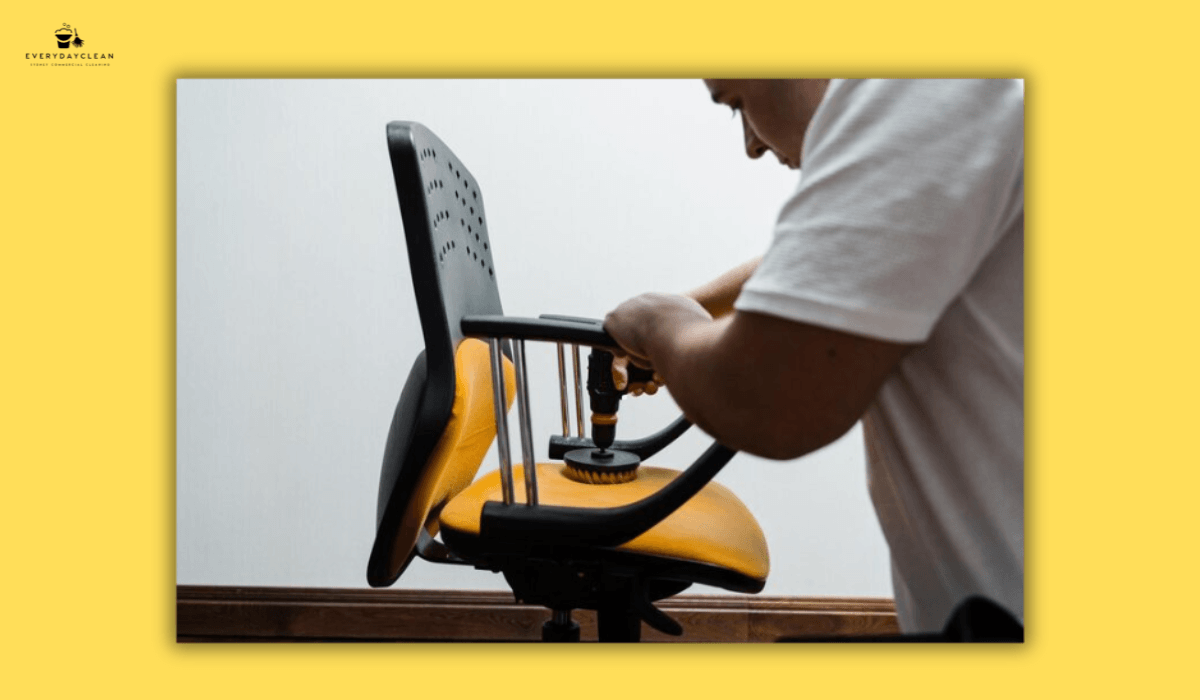
Wheels collect hair, thread, dust and debris that wraps around the axle and gradually reduces how freely the caster moves. Cleaning them is more mechanical than chemical.
What you need: a seam ripper, small scissors or a comb-style tool, tweezers for fine debris, a dry cloth, and optionally a vacuum with a narrow nozzle.
The method:
- Turn the chair upside down or lay it on its side so the wheels are accessible.
- Use the seam ripper or scissors to cut through tangled hair and thread wrapped around the axle between the wheel housing and the caster frame.
- Pull the cut hair out with fingers or tweezers. A vacuum nozzle removes fine dust from the housing.
- Wipe the wheel surface with a dry cloth.
- If the casters are removable, pull them out, clean the housing, and click them back in.
Avoid wetting metal caster axles heavily, since rust can develop inside the housing. A dry method is sufficient for most wheel cleaning.
How often do chair wheels need cleaning?
In most office environments, a few times a year is enough. Chairs in carpeted areas tend to accumulate hair and lint faster than those on hard floors. Wheels that have stopped rolling freely or that drag on the floor usually need a wheel clean before replacing the casters, since restricted rolling is most often a debris issue rather than a mechanical one.
What office chair cleaning sprays can and cannot do
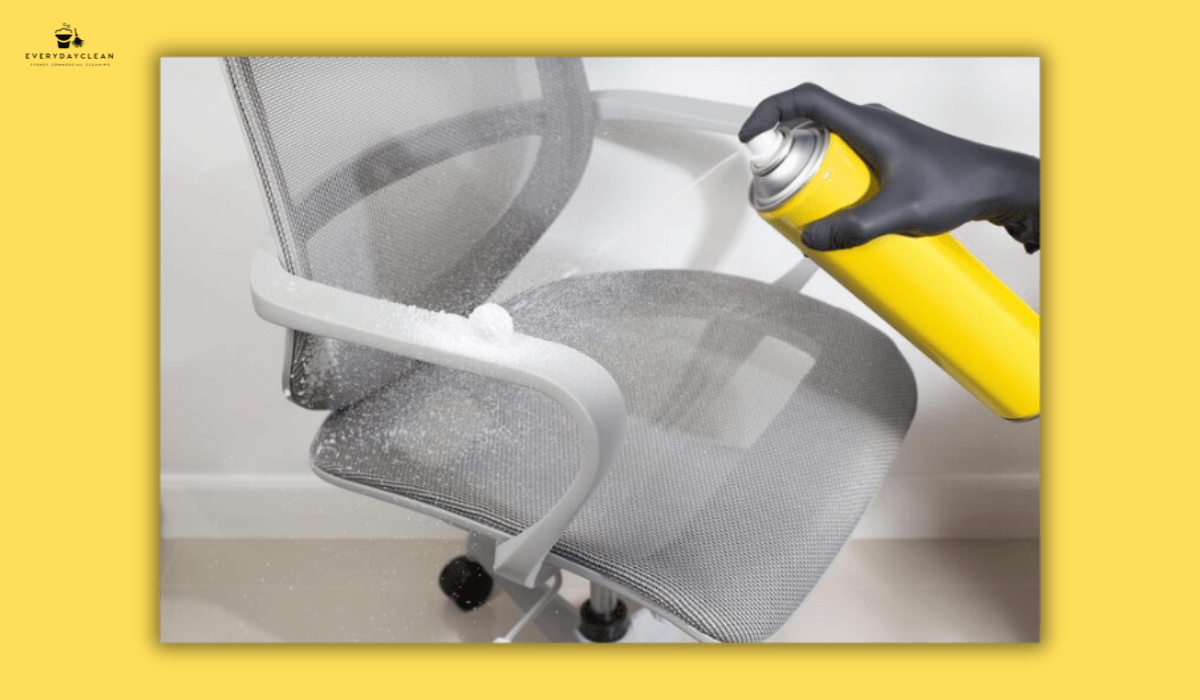
Commercial upholstery sprays sold for chair cleaning can remove surface soil, reduce light stains and freshen fabric between deeper cleans. They work best on W and WS coded fabrics, applied lightly and blotted rather than scrubbed.
What they generally cannot do:
- Reverse deep-set or long-standing stains
- Remove stains that have been heat-set or dried in
- Treat fabric coded S, unless specifically formulated as a solvent product
- Condition or protect leather (that requires a different product type)
- Replace a proper clean on heavily soiled upholstery
Odour-reducing sprays mask rather than clean. If an office chair smells, the source is usually body oil in the fabric or mildew from previous over-wetting. A cleaner addresses the source; a spray applied on top addresses the symptom.
How often should office chairs be cleaned?
For chairs in regular daily use, a maintenance vacuum every few weeks and a surface clean every three to six months suits most situations. Chairs showing visible soiling, marks or odour need attention sooner. Wheels are worth checking every three to six months in carpeted environments, or when they stop rolling freely.
For upholstered seating that forms part of a wider office or furniture refresh, furniture cleaning covers broader soft furnishing care in commercial and residential settings.
Frequently asked questions
How do I clean a fabric office chair at home?
Vacuum the chair first to remove loose debris, then check the care label code. For W or WS-coded fabric, a water-based upholstery spray or mild soap solution applied with a cloth handles most surface soil. Blot rather than scrub, use as little moisture as possible, and allow the chair to dry fully before use. For S-coded fabric, use a solvent-based product and ventilate the room.
Can I use a steam cleaner on an office chair?
It depends on the material. Fabric chairs coded W or WS may tolerate a steam cleaner used carefully, but the high moisture can penetrate padding and take a long time to dry if the steamer is held close. Mesh chairs are generally not suited to steam cleaning due to moisture reaching internal components. Leather and faux leather are usually not suitable for steam, since heat can damage the surface coating. Check the manufacturer's guidance first.
How do I remove hair from office chair wheels?
Turn the chair upside down and use a seam ripper or small scissors to cut through hair and thread wrapped around the axle between the wheel and the caster frame. Pull the cut material out with fingers or tweezers and vacuum any remaining fine debris. This is usually enough to restore smooth rolling without replacing the casters.
What is the best cleaner for an office chair?
It depends on the material. For fabric coded W or WS, a water-based upholstery spray or a small amount of mild dish soap in water suits most cleaning tasks. For fabric coded S, a solvent-based product is required. For leather, a product designed for leather use. For faux leather, a mild soap and water solution works for most surface marks. Always patch test in a hidden area first.
How do I get rid of a smell from an office chair?
First clean the chair properly rather than applying a deodoriser over the existing odour. Body oil in fabric and mildew from past over-wetting are the two most common sources. A proper clean with an appropriate product addresses the source. Once the chair is clean and dry, an odour-reducing spray can help with residual smell. If the odour persists after cleaning, the padding itself may need professional attention.
Blog