Daily Office Cleaning: Checklist & Tasks for 2026
Daily office cleaning is a structured hygiene routine that targets the surfaces, zones, and touchpoints that accumulate contamination between each working day - not a general tidy-up, but a documented task sequence that maintains a measurable standard of cleanliness across every common area. Research published in the Journal of Occupational and Environmental Medicine confirms that employees in consistently clean office environments experience fewer illness symptoms and take significantly fewer sick days. Under the Work Health and Safety Act 2011 (NSW), employers operating as a Person Conducting a Business or Undertaking (PCBU) carry a legal duty to identify hygiene risks and maintain a safe workplace - which means daily cleaning is not discretionary; it is a compliance obligation.
The Daily Office Cleaning Checklist by Zone
Daily office cleaning is most effective when tasks are organized by zone rather than by task type. A zone-based approach ensures every area receives the correct sequence of cleaning actions and prevents the common failure mode of cleaners completing a full circuit of one task - say, emptying bins - while leaving high-touch disinfection incomplete in half the building.
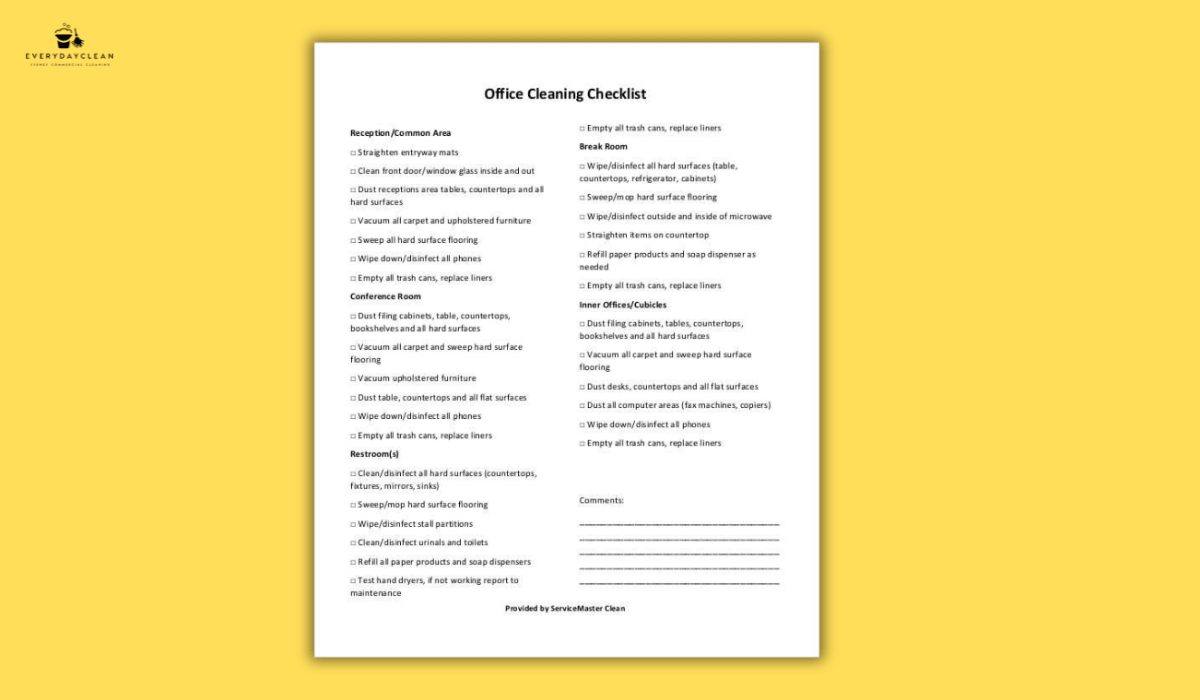
The checklist below covers the six primary zones in a standard commercial office and specifies the tasks, surface targets, and cleaning method for each.
Zone 1: Reception and Entry Areas
Reception is the first surface contact point for every visitor, client, and staff member entering the building. It is also one of the highest-traffic zones in the office, meaning bacterial and viral load on surfaces rebuilds quickly after each clean.
Daily tasks for reception and entry areas:
- Entry glass doors and handles: Wipe with a microfibre cloth and a TGA-registered disinfectant spray. Glass surfaces should be cleaned streak-free using a separate dry cloth after disinfection.
- Reception desk and countertop: Wipe with disinfectant, paying attention to the front edge and any card reader terminals or sign-in devices that receive direct hand contact.
- Visitor seating: Wipe armrests and any shared surfaces with disinfectant cloth. Fabric seating requires a dry microfibre cloth; hard surfaces require a damp disinfectant cloth.
- Bins: Empty all waste bins and replace liners. Wipe the interior of the bin with a damp cloth if residue is present.
- Floors: Vacuum hard floors and entry mats. Mop hard surfaces with an appropriate floor cleaner after vacuuming.
- Signage and light switches: Wipe all light switches, intercom panels, and any regularly touched signage with disinfectant.
Zone 2: Open-Plan Workstations and Private Offices
Shared workstations and hot-desking arrangements in hybrid workplaces concentrate contamination on keyboards, mice, desk surfaces, and shared peripherals. Research from Kimberly-Clark Professional identified computer keyboards as one of the five most contaminated surfaces in office buildings, with bacteria counts exceeding those found in restrooms.
Daily tasks for workstation areas:
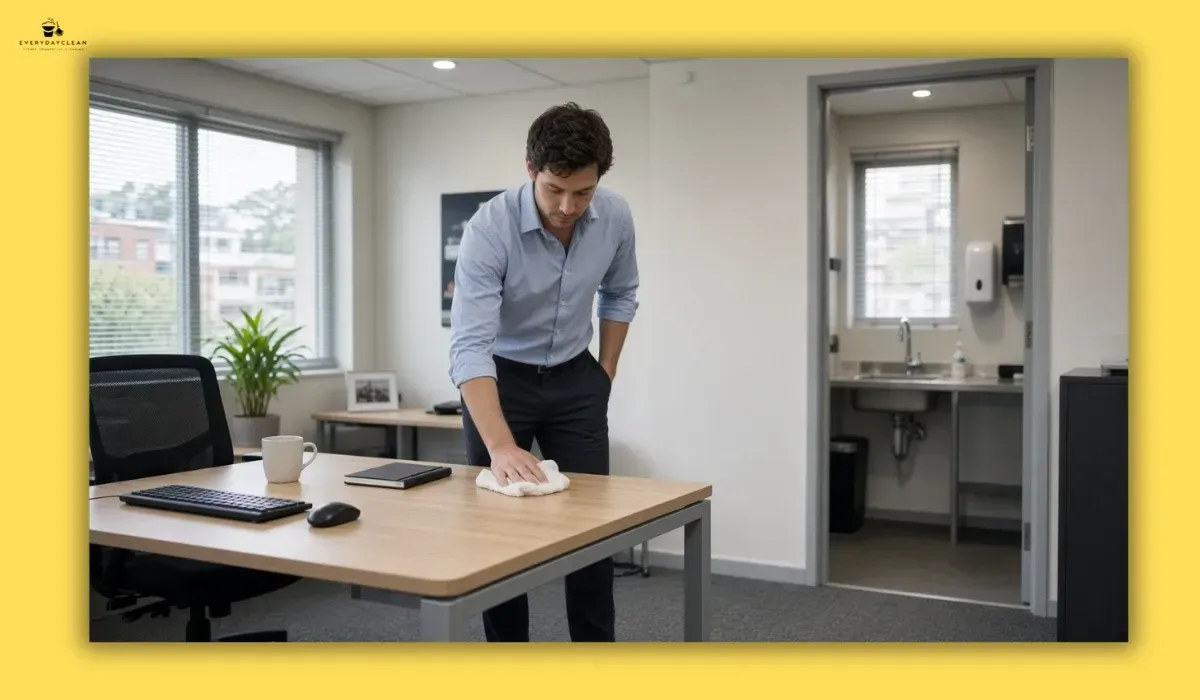
- Desk surfaces: Wipe all clear desk surfaces with a disinfectant cloth. Items left on desks should be moved, the surface cleaned underneath, and items replaced.
- Shared keyboards and mice: Clean with a dry microfibre cloth and disinfectant-appropriate wipe. Avoid saturating electronics - use product-specific electronic-safe wipes where possible.
- Phones and headsets: Disinfect handsets, speaker buttons, and any touchscreen surfaces on shared communication devices.
- Chairs: Wipe armrests and chair backs with disinfectant cloth.
- Bins at each workstation: Empty and reline. Replace the bin, not just the liner.
- Floors between workstations: Vacuum under and around desks, including cables and chair mats that trap dust and debris.
- Internal glass partitions: Spot-clean with a glass cleaner to remove fingerprints and smudges.
Zone 3: Meeting Rooms and Boardrooms
Meeting rooms accumulate food debris, beverage stains, and surface contamination from back-to-back bookings. A meeting room cleaned only at the end of the day may have hosted four separate groups since the last clean, each leaving a fresh bacterial load on the table, chairs, AV equipment, and whiteboard surfaces.
Daily tasks for meeting rooms:
- Conference table: Wipe entirely with disinfectant cloth, working from one end to the other in a single direction to avoid redistributing contamination.
- Chairs: Wipe all armrests and hard chair surfaces.
- AV equipment and remote controls: Disinfect all touchscreens, remote controls, video conferencing panels, and presentation clickers.
- Whiteboard: Erase and wipe with an appropriate whiteboard cleaner. Do not use general disinfectant on whiteboards - it degrades the surface coating.
- Bins: Empty and reline all waste bins.
- Floors: Vacuum and mop. Pay attention to corners where crumbs and debris collect after meetings with food.
- Glass doors and walls: Spot-clean fingerprints.
Zone 4: Kitchen and Break Room
The kitchen is the highest bacterial-risk zone in the average office. Kimberly-Clark Professional's large-scale office swab study identified the break room sink faucet handle and microwave door handle as the two most contaminated surfaces in office buildings - both of which are touched by nearly every staff member multiple times a day.
Daily tasks for kitchen and break room areas:
- Sink faucet handles and tap: Disinfect with a hospital-grade or TGA-registered disinfectant. Allow the required dwell time - typically 30 seconds to one minute - before wiping.
- Microwave door handle and interior: Wipe the handle with disinfectant. Wipe the interior with a damp cloth to remove food splatter before it hardens.
- Benchtops and splashbacks: Full wipe-down with disinfectant cloth, clearing all food debris and liquid residue.
- Coffee machine exterior: Wipe the touchpad, buttons, and drip tray area.
- Refrigerator door handle: Disinfect daily. Full interior refrigerator cleaning is a weekly task.
- Kitchen sink basin: Clean and disinfect. Remove any dishes left in the sink; place in the dishwasher if one is present.
- Bins: Empty kitchen waste bins and compost bins daily. Kitchen bins generate odour faster than office bins due to food waste content.
- Floors: Sweep or vacuum before mopping. Kitchen floors collect food particles that attract pests if left overnight.
Zone 5: Restrooms and Bathroom Facilities
Office restrooms require the most rigorous daily cleaning protocol because they carry the highest risk of cross-contamination between staff. High-traffic restrooms in buildings with 20 or more occupants should be serviced at a minimum twice daily - once in the morning before the working day begins and once at midday or early afternoon.
Daily tasks for restrooms:
- Toilets and cisterns: Scrub bowl with a toilet brush and toilet cleaner. Wipe the exterior, cistern top, seat, lid, and flush button with disinfectant cloth. Use a separate cloth (or disposable cloth) for each toilet to prevent cross-contamination.
- Urinals: Clean and disinfect the urinal bowl and any surrounding wall tiles with a urinal-specific cleaner.
- Sinks and basins: Scrub with a basin cleaner and disinfect the tap handles, basin surround, and soap dispenser body.
- Mirrors: Clean with glass cleaner and a lint-free cloth.
- Consumable restocking: Refill toilet paper, paper towels, and liquid soap to full capacity at each daily clean. Do not wait for stock to run out before restocking.
- Sanitary bins: Empty and refill sanitary disposal units.
- Floors: Mop with a hospital-grade or commercial floor disinfectant after all surface cleaning is complete. Start from the furthest point from the door and work toward the exit.
Zone 6: Corridors, Stairwells, and Lift Areas
Corridors and vertical circulation zones are frequently overlooked in daily cleaning because they appear less visually cluttered than work areas. However, lift buttons, stair handrails, and corridor door handles receive constant hand contact throughout the day and accumulate contamination rapidly.
Daily tasks for corridors and circulation areas:
- Lift buttons and control panels: Disinfect all button surfaces inside and outside each lift. In buildings with multiple floors, this is a critical daily task.
- Lift interior floors and walls: Vacuum or sweep the lift floor. Wipe the interior walls and door edges.
- Stair handrails: Wipe the full length of handrails on all stairwells with a disinfectant cloth.
- Corridor floors: Vacuum or sweep, then mop.
- Corridor door handles: Disinfect all door handles along corridors, including fire door push bars and release mechanisms.
How Daily Office Cleaning Differs from Weekly and Monthly Schedules
Daily office cleaning covers surface hygiene and consumable maintenance - the tasks that deteriorate visibly within 24 hours if skipped. Weekly cleaning addresses cumulative contamination that builds beyond what daily protocols reach: interior window cleaning, floor polishing, fridge interior cleaning, detailed upholstery vacuuming, and vent dusting.
Monthly cleaning targets structural and deep-hygiene tasks: ceiling fan cleaning, air vent sanitisation, blind cleaning, carpet shampooing, and grout scrubbing. These tasks cannot substitute for daily cleaning - they supplement it by addressing contamination that daily routines disturb but do not fully remove.
A complete office cleaning schedule integrates all three frequencies into a documented plan that assigns responsibility, confirms completion, and creates a compliance record the building manager can review at any time.
Setting Up a Daily Office Cleaning Sign-Off System
A daily office cleaning routine without a sign-off system is difficult to audit and impossible to enforce when standards slip. The sign-off log is not administrative overhead - it is the document that proves the work was done and provides the performance baseline against which a contractor's service can be assessed.
An effective daily sign-off system includes:
- A dated checklist posted or stored at each zone, listing every task and its completion status
- The cleaner's initials or signature against each completed task
- A space for notes on areas skipped due to access issues, items requiring repair, or consumables that need restocking
- A weekly review mechanism where the facilities manager or office manager checks the log and flags any patterns of missed tasks
Digital sign-off platforms allow cleaning contractors to record task completion with time-stamped photographs, giving building managers real-time visibility of service delivery. For offices with
office cleaning Sydney requirements across multiple floors or sites, digital reporting eliminates the need for physical log checks and provides auditable records that support WHS compliance documentation.
FAQs
The questions below reflect what facilities managers, office managers, and business owners consistently ask when setting up or reviewing a daily office cleaning programme. They cover task prioritization, frequency, and the practical decisions that determine whether a cleaning routine delivers a measurable hygiene standard.
What tasks should be done in an office every day?
The non-negotiable daily tasks in any office cleaning programme are: emptying and relining all waste bins; disinfecting high-touch surfaces including door handles, light switches, lift buttons, kitchen faucet handles, and shared equipment; wiping and sanitising all kitchen surfaces including the microwave handle and benchtops; cleaning and restocking restroom facilities; vacuuming all carpeted areas and mopping hard floors; and spot-cleaning glass partitions and entry doors. These tasks are non-negotiable because they directly prevent bacterial and viral accumulation on surfaces with daily replenishment of contamination from occupant contact. Tasks missed on any given day compound - a bin not emptied today attracts odour by tomorrow; a faucet handle not disinfected today carries yesterday's and today's contamination by morning.
How often should high-touch surfaces be cleaned in an office?
High-touch surfaces - defined as any surface receiving direct hand contact from multiple people across the day - should be disinfected at minimum once daily as part of the standard daily office cleaning routine. In high-traffic offices with 50 or more occupants, or during respiratory illness seasons (typically May to September), high-touch surfaces including lift buttons, shared phones, door handles, and kitchen equipment should be disinfected twice daily: once at the start of the working day and once at midday. University of Arizona research found that influenza viruses can survive on hard surfaces for 24 to 48 hours, making a single end-of-day clean insufficient to interrupt transmission in an active office environment.
Is daily office cleaning required by law?
There is no specific regulation mandating a cleaning frequency of "daily" in the Work Health and Safety Act 2011 (NSW). However, the Act's PCBU obligations require employers to identify and control hygiene risks in the workplace, which in practice means maintaining facilities - restrooms, kitchens, common areas, and workstations - at a standard that does not create health risks for occupants. Safe Work Australia's guidance on workplace health and hygiene identifies regular cleaning as a primary control measure. In buildings where staff regularly become ill with infectious conditions, failure to maintain adequate cleaning frequency can be treated as a failure to exercise duty of care under the WHS Act. Daily cleaning of restrooms and kitchens is, in this context, the minimum reasonable standard for any occupied commercial office.
What is the difference between cleaning, sanitising, and disinfecting?
These three terms describe distinct processes with different outcomes. Cleaning removes visible dirt, dust, and debris from a surface using detergent and mechanical action (wiping, scrubbing). It reduces the number of pathogens present but does not eliminate them. Sanitising reduces the number of pathogens on a surface to a safe level as defined by public health standards - typically used in food-contact areas. Disinfecting uses a TGA-registered or EPA-approved chemical solution applied at the correct dilution and for the required contact dwell time to kill a defined percentage of bacteria and viruses on a surface. Daily office cleaning should include disinfection - not just cleaning - of all high-touch surfaces. Wiping a door handle with a damp cloth cleans it; wiping it with a TGA-registered disinfectant and allowing it to air-dry for 30 to 60 seconds disinfects it.
A Daily Routine That Holds Its Standard
Daily office cleaning works when it is treated as a documented process rather than an informal habit. The difference between an office that stays genuinely clean and one that cycles through periods of visible decline is almost always a documentation gap - tasks that were agreed but never written down, frequencies that were intended but never confirmed, and sign-off systems that were planned but never implemented.
The ten-zone checklist in this article provides the task foundation. What sustains it over time is accountability: a named person responsible for each zone, a completed log reviewed weekly, and a clear escalation path when a task is missed. For workplaces that engage a professional commercial cleaning service, these same accountability mechanisms apply - the contractor's sign-off log should be accessible to the office manager and reviewed against the agreed scope of works at least monthly.
Offices that build these systems into their cleaning programme from the start spend significantly less time managing complaints, resolving disputes with contractors, and responding to hygiene incidents than those that treat daily cleaning as a background activity. The checklist is the starting point; the sign-off system is what keeps it working.
For properties requiring
office cleaning Sydney CBD services, Everyday Clean provides fully documented daily cleaning programmes with digital sign-off and compliance reporting.
Blog